Retrofitting & Structural Repair Solutions
Buildings, like people, age and suffer from “ailments”—structural cracks, corroded reinforcement, or design loads that have exceeded their original capacity. Retrofitting is the specialized process of strengthening an existing structure to meet modern safety standards or to repair damage caused by time and environment. At ICSE, we use “structural surgery” techniques—incorporating Carbon Fiber (CFRP), Micro-concrete, and Epoxy injections—to make your building stronger than the day it was built.
Specialized Repair Techniques
Carbon Fiber (CFRP) Wrapping: High-tensile strength fabric that adds immense load-bearing capacity to columns and beams without adding bulk.
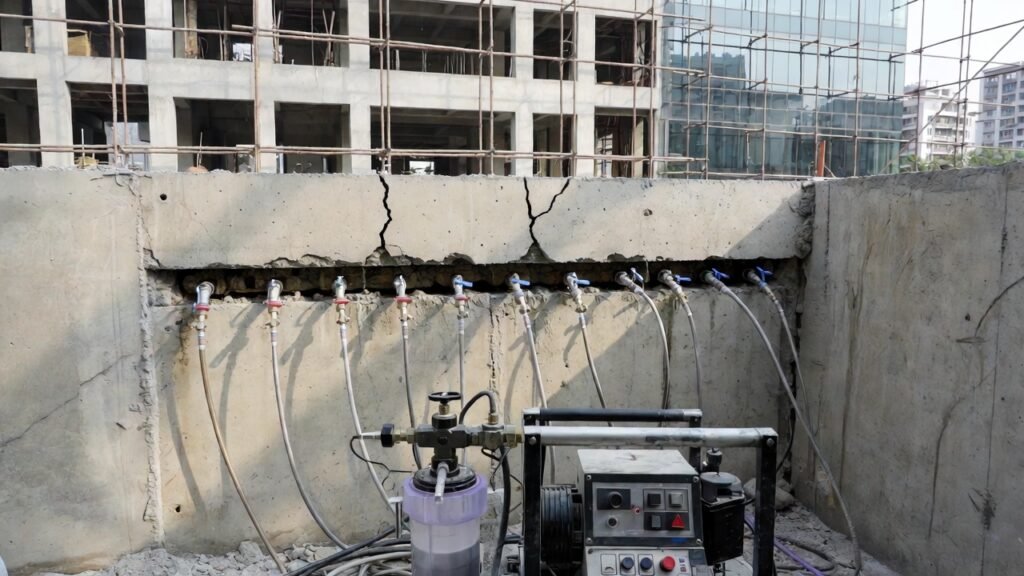
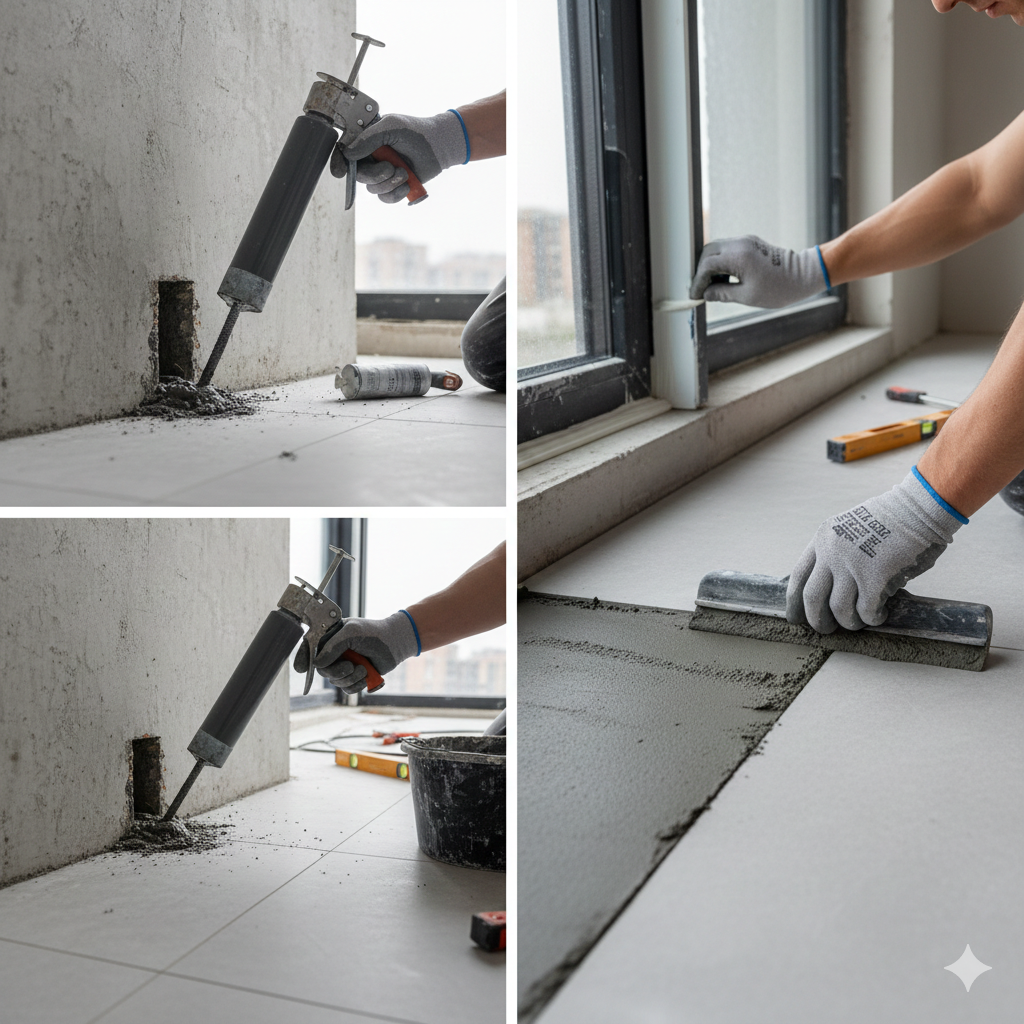
Pressure Epoxy Injection: Filling structural cracks with high-strength resins that bond concrete back together at a molecular level.
Section Enlargement (Jacketing): Adding a new “jacket” of reinforced micro-concrete to existing pillars to increase their footprint and strength.
Rebar Rust Removal & Protection: Treating “concrete cancer” by cleaning corroded steel and applying zinc-rich anti-corrosion primers.
Foundation Strengthening: Underpinning and soil stabilization to stop building settlement and tilting.
Why Retrofit?
Seismic Safety: Upgrade older buildings to withstand earthquakes and lateral forces.
Load Upgrading: Safely add extra floors or heavy machinery to a building not originally designed for them.
Cost-Effective Alternative: Why demolish and rebuild? Retrofitting costs a fraction of new construction and saves months of time.
Compliance & Peace of Mind: Ensure your structure meets BNBC (Bangladesh National Building Code) safety requirements.
The ICSE "Recovery" Process
We follow a strict engineering workflow to ensure safety:
Structural Audit: We begin with Non-Destructive Testing (NDT) like Rebound Hammer and Ultrasonic Pulse Velocity to find hidden weaknesses.
Surface De-bonding: Removing damaged, “spalled” concrete to reveal the healthy core of the structure.
Reinforcement Treatment: Sandblasting rusted steel and adding extra “shear stirrups” or longitudinal bars where necessary.
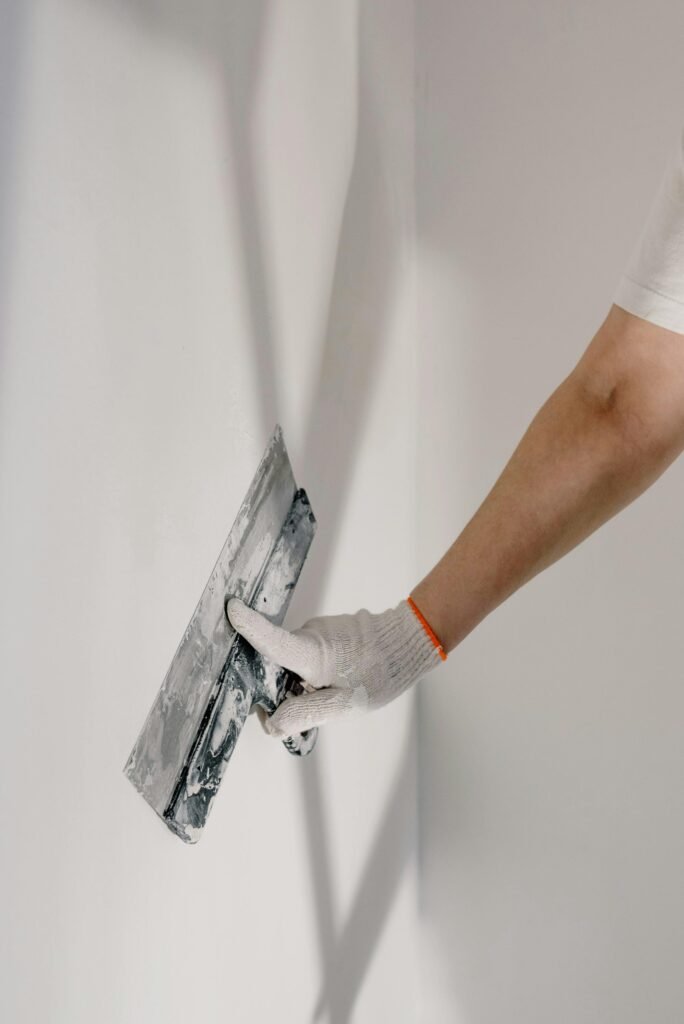
Material Application: Precise application of specialized mortars or CFRP wraps under controlled temperature and humidity.
Quality Verification: Final testing to confirm the new bond strength and load capacity.
Common Project Scenarios:
Industrial Plants: Repairing beams damaged by heavy machinery vibration or chemical leaks.
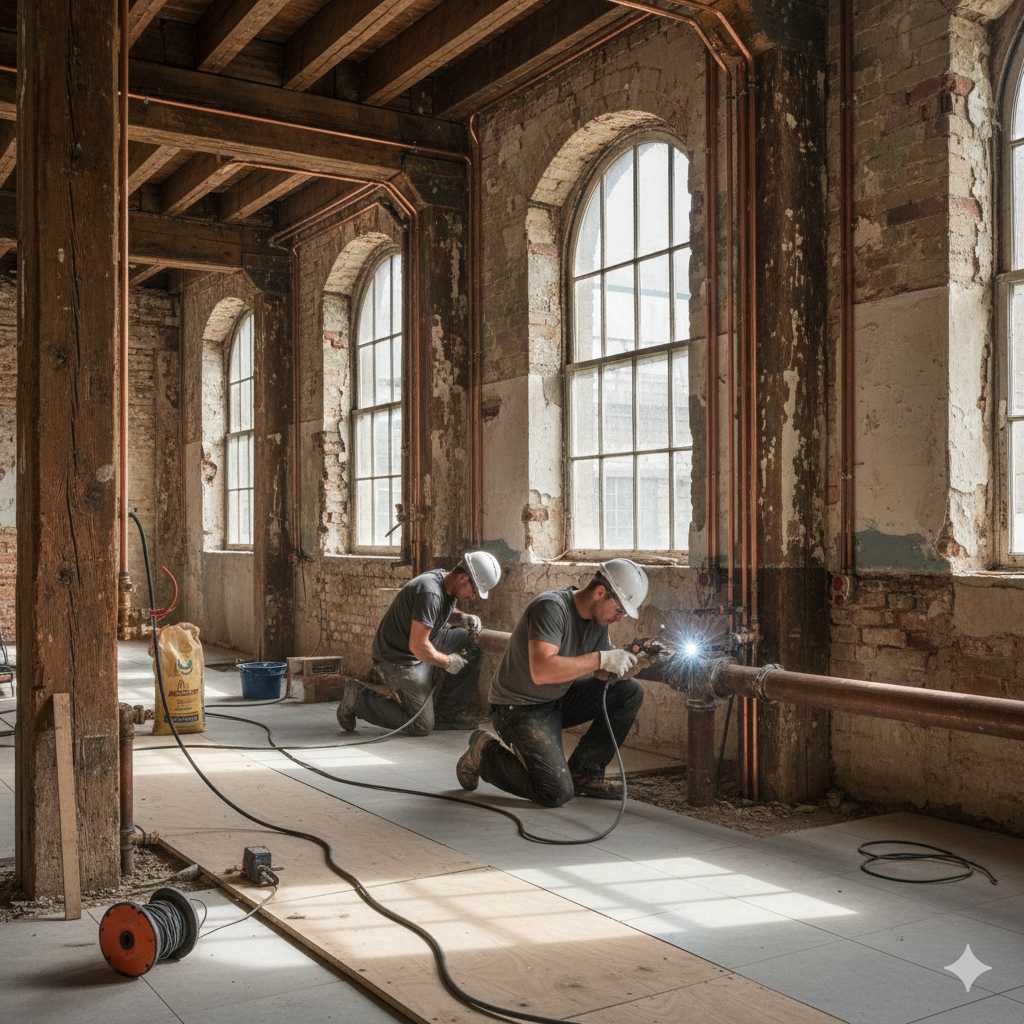
Heritage Buildings: Restoring old structures while maintaining their original architectural look.
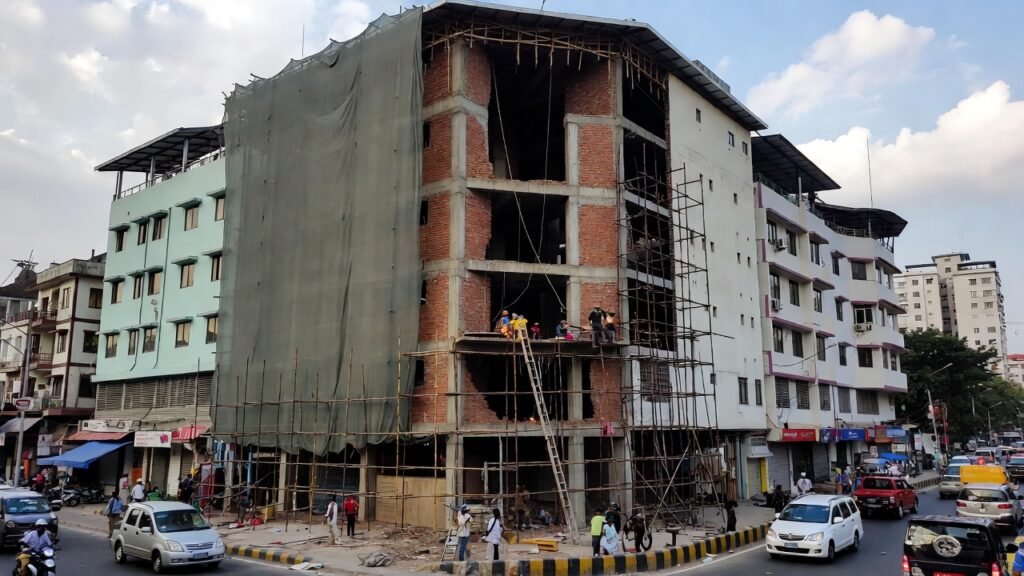
Commercial Buildings: Adding extra floors (Vertical Extension) by strengthening the ground-floor columns.
Residential Complexes: Fixing sagging balconies or cracked roof beams.
“A crack in your column isn’t just an eye-sore; it’s a warning. Don’t wait for structural failure. Our team of specialized engineers is ready to diagnose and strengthen your assets with the latest global retrofitting technology.”
Related Services & Products
Other Services & Products